
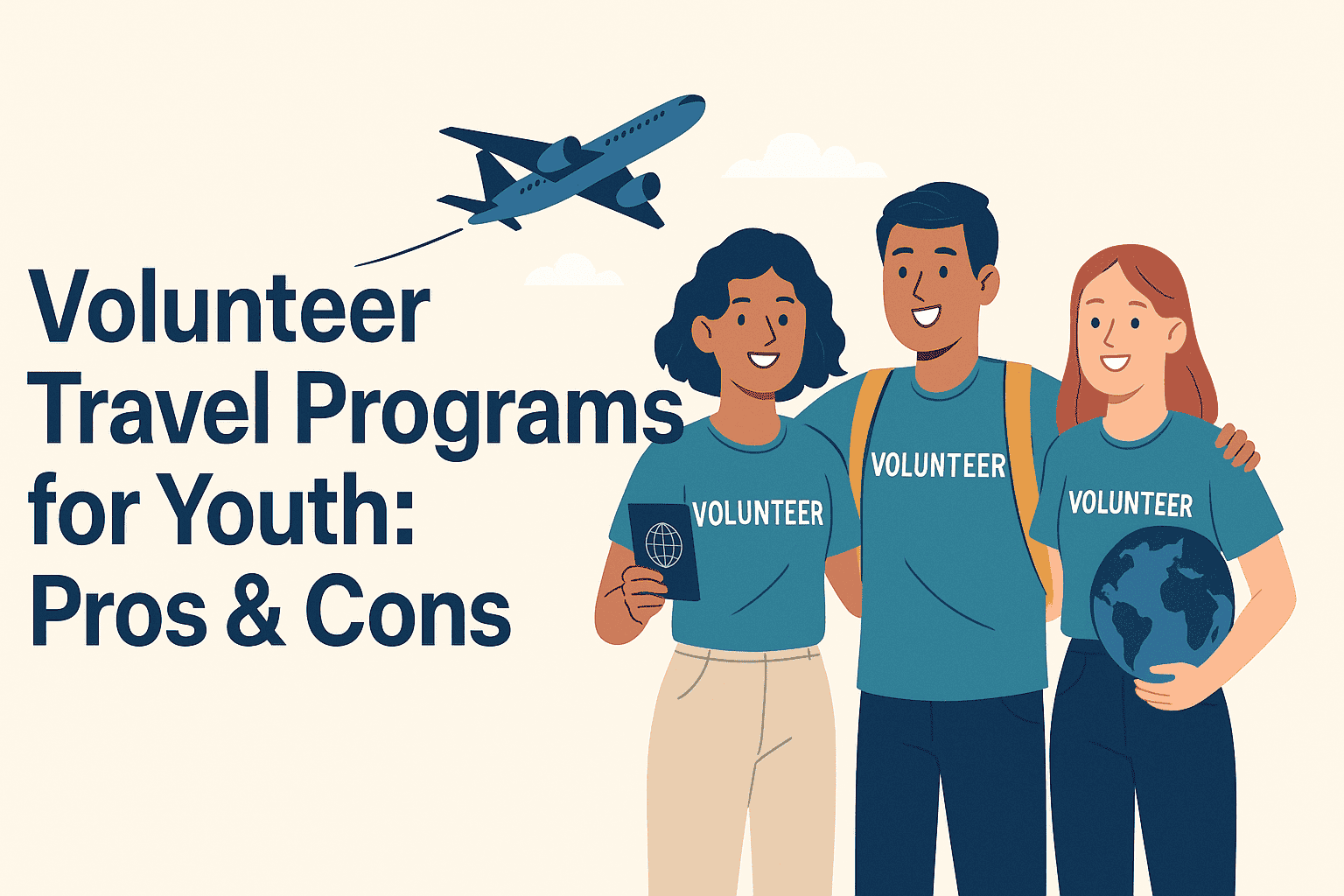
Volunteer travel programs allow teenagers and students to explore the world while supporting communities in need. These opportunities give youth exposure to new cultures, practical experience, and valuable life lessons. However, volunteer travel also comes with challenges that must be considered before joining a program.
This guide explains the major pros and cons of travel-based volunteering for young people.
What is Volunteer Travel?

Volunteer travel (also called “voluntourism”) involves traveling to another city or country to work on community development projects such as:
- Teaching and childcare support
- Building homes or schools
- Wildlife and environmental conservation
- Supporting healthcare and awareness campaigns
Young volunteers usually join through registered organizations that provide supervision, training, accommodation, and learning opportunities.
Pros of Volunteer Travel Programs for Youth
Builds Global Awareness
Students learn about different lifestyles, cultures, and challenges that people face around the world. This increases empathy and open-minded thinking.
Hands-On Skill Development
Volunteers gain skills like teamwork, problem-solving, leadership, communication, and adaptability — important for future careers.
Creates Meaningful Social Impact
From teaching children to supporting conservation projects, youth can help improve real lives and local communities.
Enhances College & Scholarship Applications
Volunteer travel is seen as a strong achievement that reflects independence, maturity, and social responsibility.
Improves Language and Communication

Exposure to new environments helps students learn new languages or improve international communication skills.
Builds Lifelong Friendships
Volunteers meet people from different places, which can create meaningful connections and a global network.
Cons of Volunteer Travel Programs for Youth
Travel Costs Can Be High
Flights, program fees, accommodation, and food may be expensive — making it less accessible for some families.
Cultural Differences Can Be Challenging
Youth must adjust to new food, customs, weather, and environment — which may feel uncomfortable at first.
Requires Proper Safety and Supervision
Not all programs ensure secure travel and trained mentors. Students must choose trusted, certified organizations.
Short-Term Volunteering May Limit Impact
Some programs are too short to build long-term community benefits. Sustainable planning matters.
Emotional and Physical Stress
Volunteering abroad can be tiring and emotionally heavy, especially when working in poverty-affected areas.
How to Choose the Right Volunteer Travel Program
Students should ask these questions before joining:
- Is the organization reputable and transparent?
- What type of project will I work on?
- Who will supervise us?
- Is the impact sustainable and meaningful?
- What costs are included or excluded?
- Is training provided before volunteering?
Making informed decisions ensures both personal growth and community benefit.
Conclusion
Volunteer travel programs offer incredible opportunities for youth to learn, explore, and make a difference in the world. While the benefits are impressive, families and students must carefully evaluate programs to understand the real costs and responsibilities.
With the right organization and mindset, volunteer travel can become a life-changing experience that shapes young people into confident and compassionate global citizens.
Would you like to travel for volunteering someday?